Die Bittschrift eines Feldarbeiters um seinen Mantel
Ein Arbeiter im Juda des 7. Jahrhunderts beschwert sich über einen gepfändeten Mantel — genau der Fall, den das Gesetz in Exodus und Deuteronomium regelt.
Vom Boden bestätigtInschriftlate 7th century BC
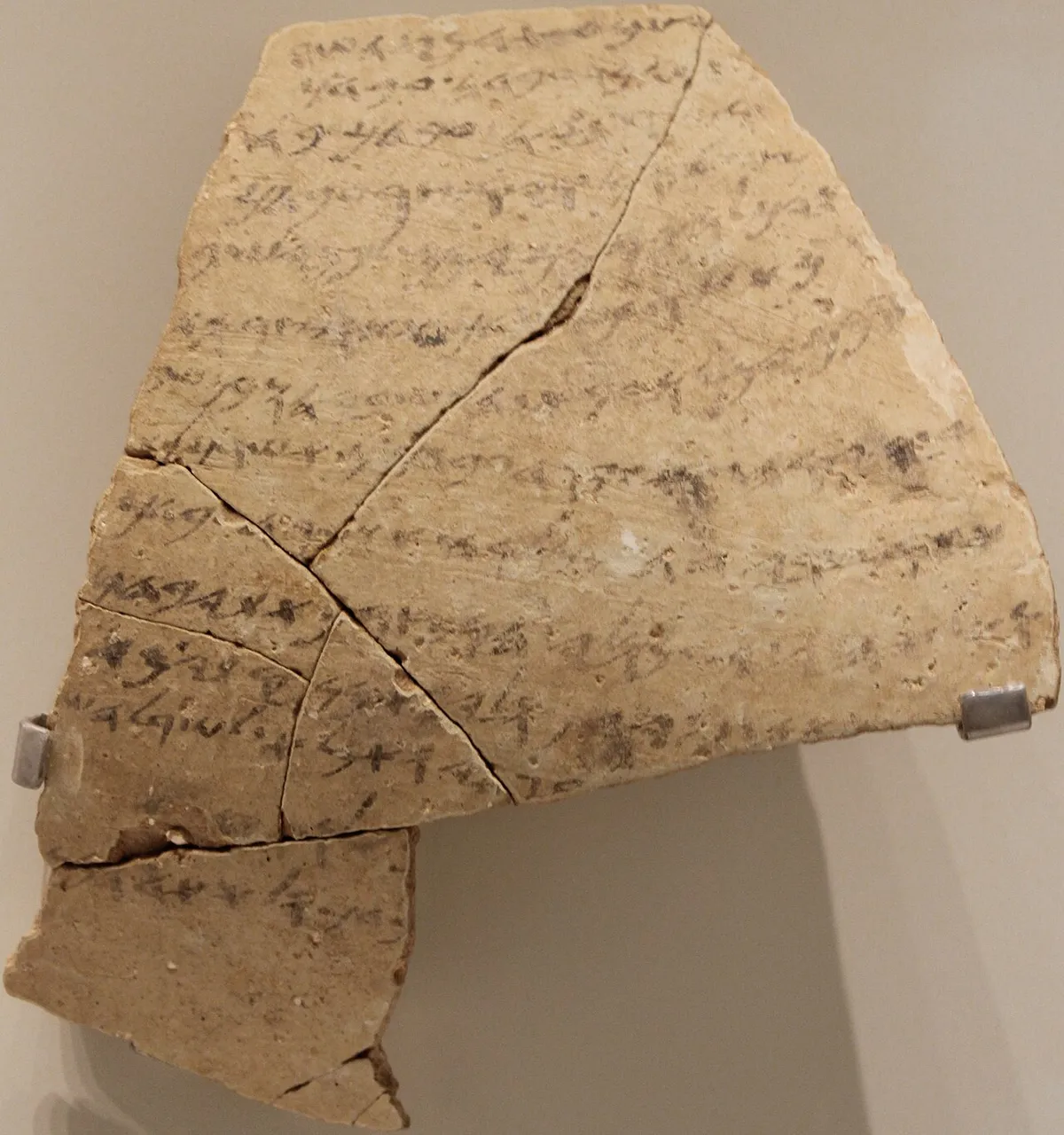
A harvester writes to the governor: he finished his measure of grain, and a man took his cloak and has not given it back. The law in Exodus and Deuteronomy says a garment taken in pledge must be returned before sunset, because it is the man's only covering.
Your servant reaped and finished, and stored a few days ago… and Hoshavyahu came and took your servant's garment… all my companions will testify for me.
- Gefunden
- Meṣad Ḥashavyahu, on the coast near Yavneh-Yam, Israel, 1960 — Joseph Naveh's excavation
- Heute in
- Israel Museum, Jerusalem
- Sprache
- Hebrew
- Wie es zu uns kam
- Ausgegraben oder noch dort stehend, wo es errichtet wurde.
Was er zeigt
The petition never cites a law. It shows the situation the biblical law addresses, and a labourer who expects redress.
Wie Historiker es nutzen
Widely discussed in legal history and in studies of literacy: an ordinary worker had his plea written down.
In der Schrift
Quellen
- Naveh, "A Hebrew Letter from the Seventh Century B.C.", IEJ 10 (1960)
Diese Texte liegen vorerst auf Englisch vor. Übersetzungen folgen.