A petição de um trabalhador rural sobre o seu manto
Um trabalhador da Judá do século VII reclama por um manto apreendido — exatamente o caso que a lei do Êxodo e do Deuteronómio regula.
Confirmado pelo terrenoInscriçãolate 7th century BC
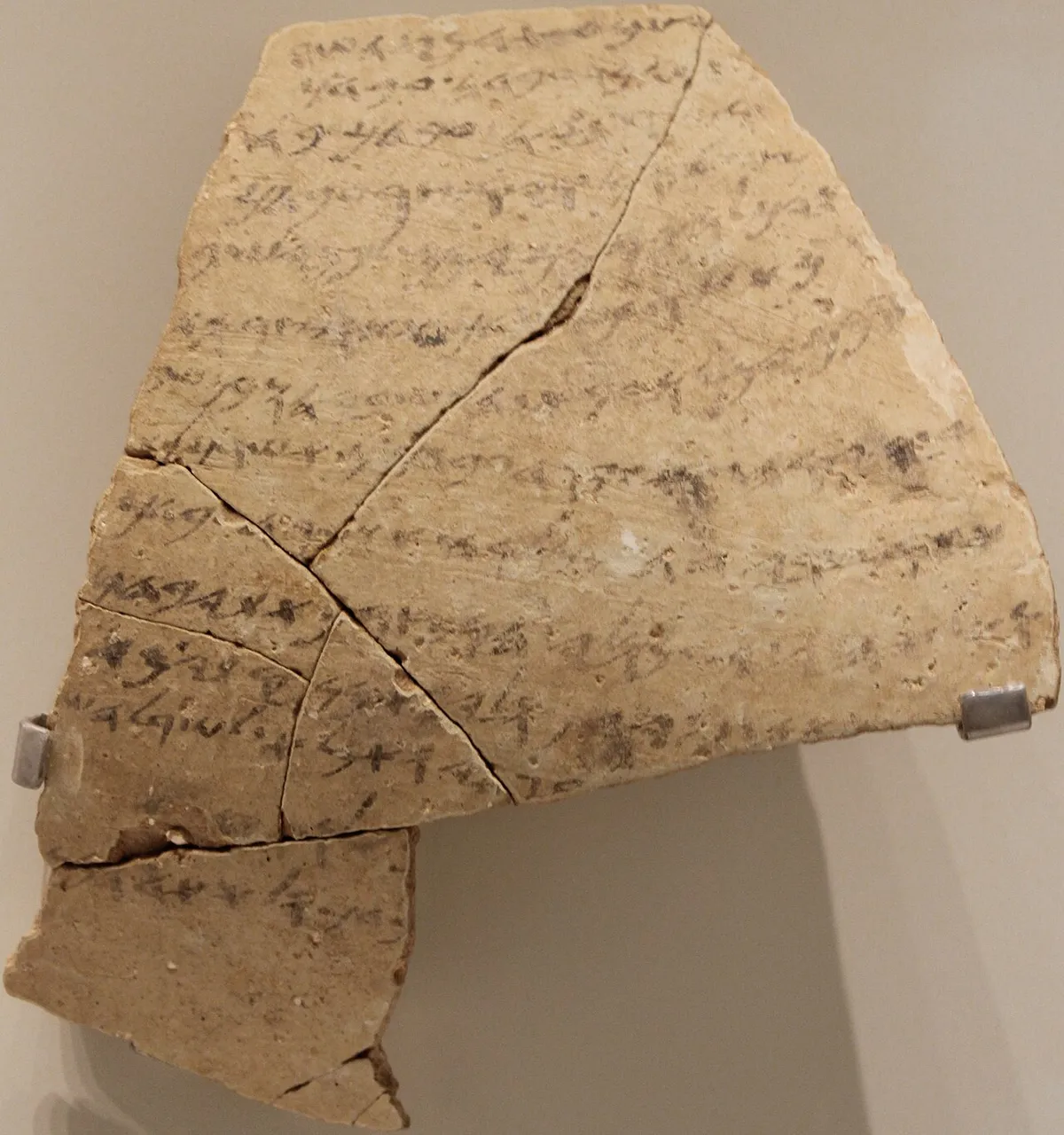
A harvester writes to the governor: he finished his measure of grain, and a man took his cloak and has not given it back. The law in Exodus and Deuteronomy says a garment taken in pledge must be returned before sunset, because it is the man's only covering.
Your servant reaped and finished, and stored a few days ago… and Hoshavyahu came and took your servant's garment… all my companions will testify for me.
- Encontrado
- Meṣad Ḥashavyahu, on the coast near Yavneh-Yam, Israel, 1960 — Joseph Naveh's excavation
- Conservado em
- Israel Museum, Jerusalem
- Língua
- Hebrew
- Como chegou até nós
- Escavado, ou ainda de pé onde foi construído.
O que mostra
The petition never cites a law. It shows the situation the biblical law addresses, and a labourer who expects redress.
Como os historiadores o usam
Widely discussed in legal history and in studies of literacy: an ordinary worker had his plea written down.
Na Escritura
Fontes
- Naveh, "A Hebrew Letter from the Seventh Century B.C.", IEJ 10 (1960)
Por enquanto estes textos estão em inglês. As traduções virão.