Ombi la mfanyakazi wa shamba kuhusu joho lake
Mfanyakazi katika Yuda ya karne ya saba analalamikia joho lililotwaliwa — kesi ile ile ambayo sheria za Kutoka na Kumbukumbu la Torati zinaishughulikia.
Imethibitishwa na ardhiMaandishi ya jiwelate 7th century BC
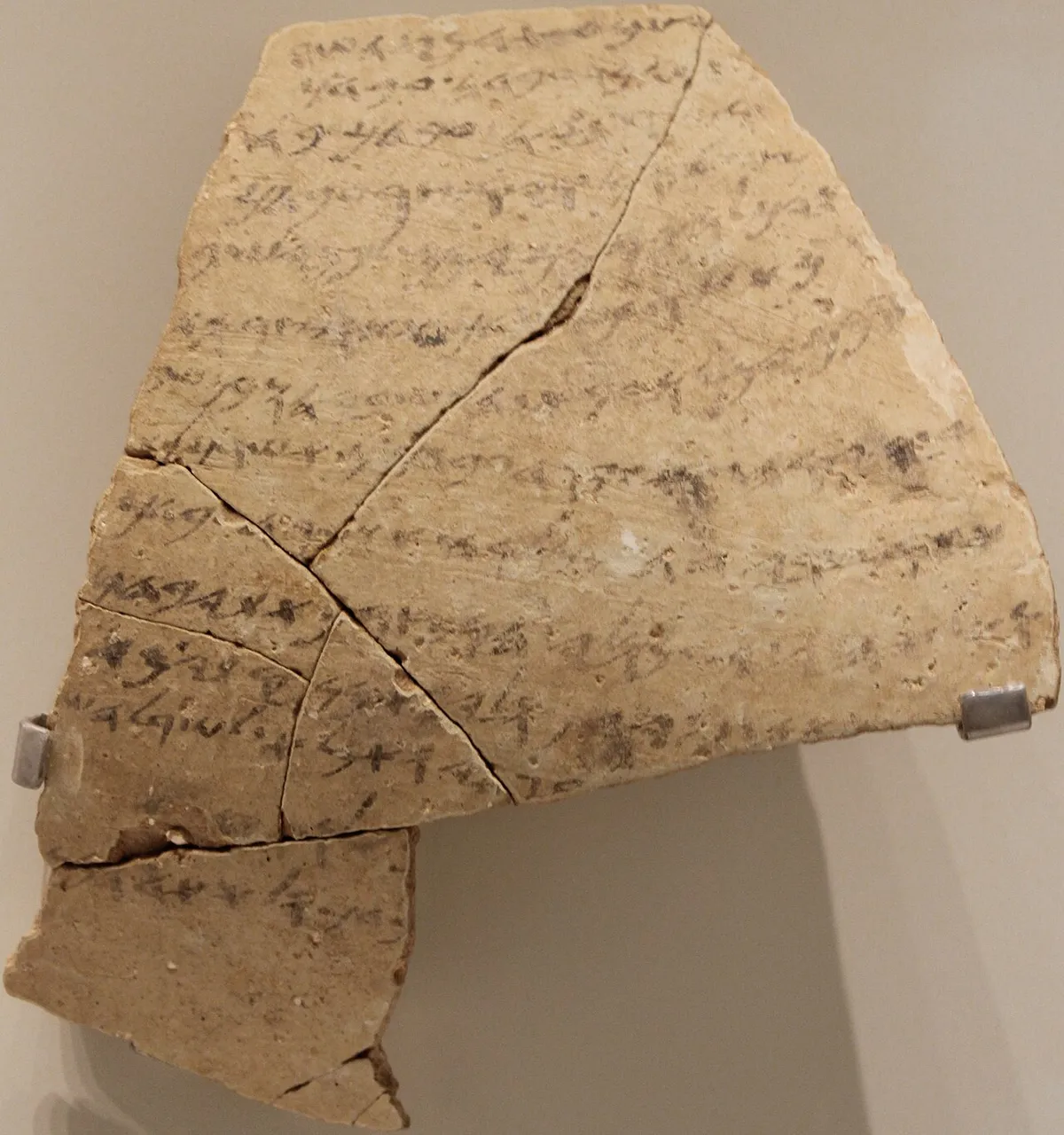
A harvester writes to the governor: he finished his measure of grain, and a man took his cloak and has not given it back. The law in Exodus and Deuteronomy says a garment taken in pledge must be returned before sunset, because it is the man's only covering.
Your servant reaped and finished, and stored a few days ago… and Hoshavyahu came and took your servant's garment… all my companions will testify for me.
- Kilipatikana
- Meṣad Ḥashavyahu, on the coast near Yavneh-Yam, Israel, 1960 — Joseph Naveh's excavation
- Kinahifadhiwa
- Israel Museum, Jerusalem
- Lugha
- Hebrew
- Jinsi kilivyotufikia
- Kimefukuliwa, au bado kimesimama pale kilipojengwa.
Kinachoonyesha
The petition never cites a law. It shows the situation the biblical law addresses, and a labourer who expects redress.
Jinsi wanahistoria wanavyokitumia
Widely discussed in legal history and in studies of literacy: an ordinary worker had his plea written down.
Katika Maandiko
Vyanzo
- Naveh, "A Hebrew Letter from the Seventh Century B.C.", IEJ 10 (1960)
Kwa sasa maelezo haya yapo kwa Kiingereza. Tafsiri zitafuata.