La petición de un jornalero por su manto
Un trabajador de la Judá del siglo VII reclama por un manto confiscado: exactamente el caso que legislan las leyes de Éxodo y Deuteronomio.
Confirmado por el terrenoInscripciónlate 7th century BC
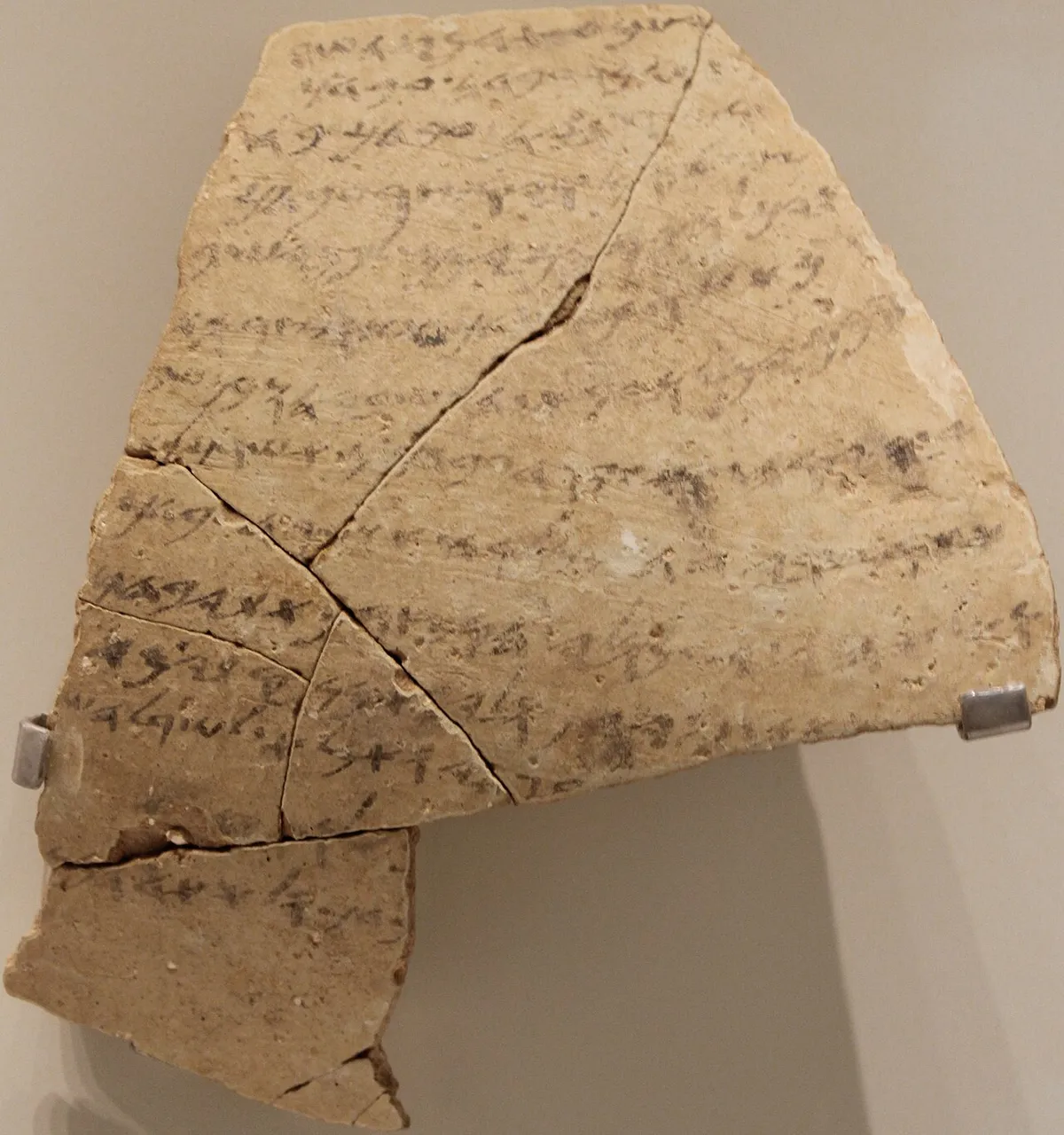
A harvester writes to the governor: he finished his measure of grain, and a man took his cloak and has not given it back. The law in Exodus and Deuteronomy says a garment taken in pledge must be returned before sunset, because it is the man's only covering.
Your servant reaped and finished, and stored a few days ago… and Hoshavyahu came and took your servant's garment… all my companions will testify for me.
- Hallado
- Meṣad Ḥashavyahu, on the coast near Yavneh-Yam, Israel, 1960 — Joseph Naveh's excavation
- Se conserva en
- Israel Museum, Jerusalem
- Lengua
- Hebrew
- Cómo llegó hasta nosotros
- Excavado, o todavía en pie donde se construyó.
Qué muestra
The petition never cites a law. It shows the situation the biblical law addresses, and a labourer who expects redress.
Cómo lo usan los historiadores
Widely discussed in legal history and in studies of literacy: an ordinary worker had his plea written down.
En la Escritura
Fuentes
- Naveh, "A Hebrew Letter from the Seventh Century B.C.", IEJ 10 (1960)
Por ahora estos textos están en inglés. Las traducciones llegarán.