Die Königsinschrift von Ekron
Eine Philisterstadt, die die Bibel wiederholt nennt, wird durch ihre eigene Inschrift vor Ort identifiziert — mit einer Dynastie namentlich genannter Herrscher.
Außerbiblisch genanntInschriftc. 680–655 BC
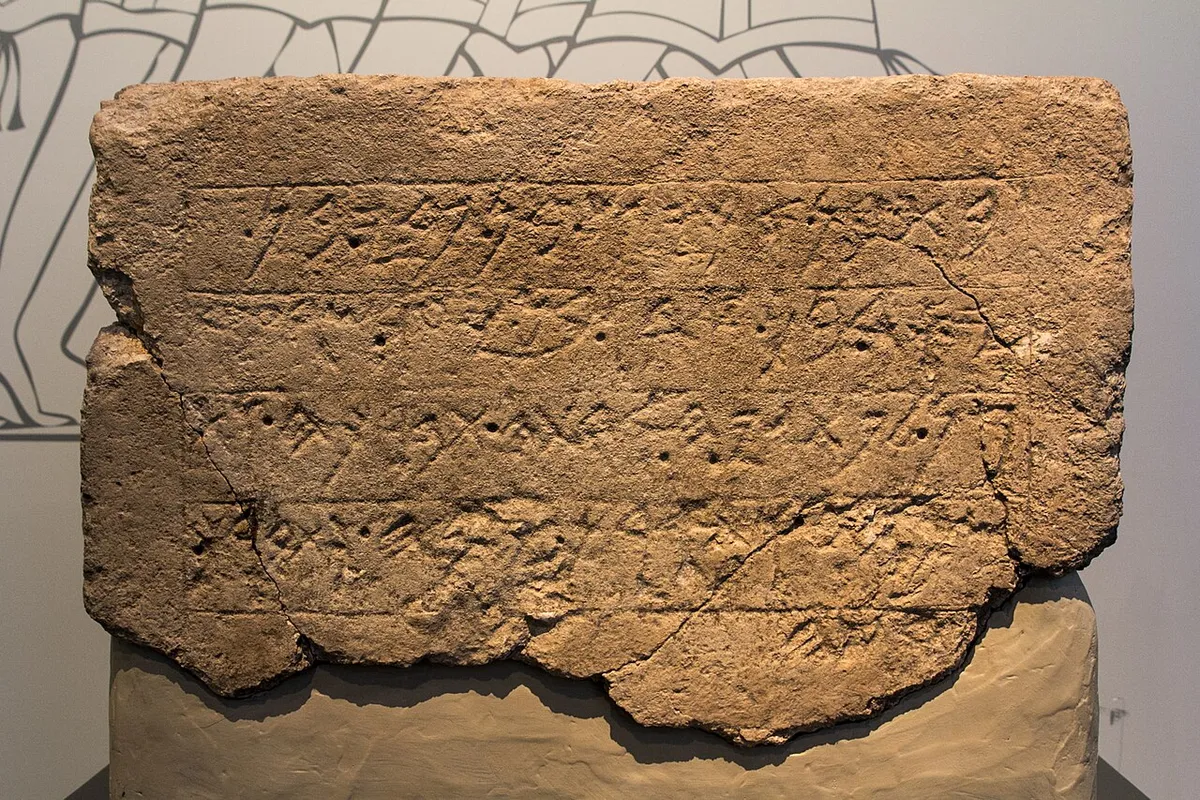
A limestone block found where it was set, dedicating a temple built by Ikausu son of Padi, ruler of Ekron, to his goddess. It names the city — confirming the identification of the mound as Ekron — and five of its kings. Padi and Ikausu are both known from Assyrian records too.
The temple which he built, Ikausu son of Padi, son of Ysd, son of Ada, son of Ya'ar, ruler of Ekron, for Ptgyh his lady.
- Gefunden
- In the ruins of a temple at Tel Miqne (Ekron), Israel, 1996 — Seymour Gitin and Trude Dothan's excavation
- Heute in
- Israel Museum, Jerusalem
- Sprache
- Phoenician script, Philistine dialect
- Wie es zu uns kam
- Ausgegraben oder noch dort stehend, wo es errichtet wurde.
Was er zeigt
The ruler's name Ikausu is the same name as the Achish of 1 Samuel, but this king lived some three centuries later — the name persisted, the man is not the same.
Wie Historiker es nutzen
One of the most important Iron Age finds in Israel; it settled the identification of the site and gave Philistine history a dynasty.
In der Schrift
Verbunden mit
Quellen
- Gitin, Dothan & Naveh, "A Royal Dedicatory Inscription from Ekron", IEJ 47 (1997)
- Ekron Royal Dedicatory Inscription — overview
Diese Texte liegen vorerst auf Englisch vor. Übersetzungen folgen.