Maandishi ya kifalme ya Ekroni
Mji wa Wafilisti ambao Biblia inautaja mara kwa mara umetambuliwa kwa maandishi yake mwenyewe, palepale, wenye ukoo wa watawala waliotajwa kwa majina.
Ametajwa nje ya BibliaMaandishi ya jiwec. 680–655 BC
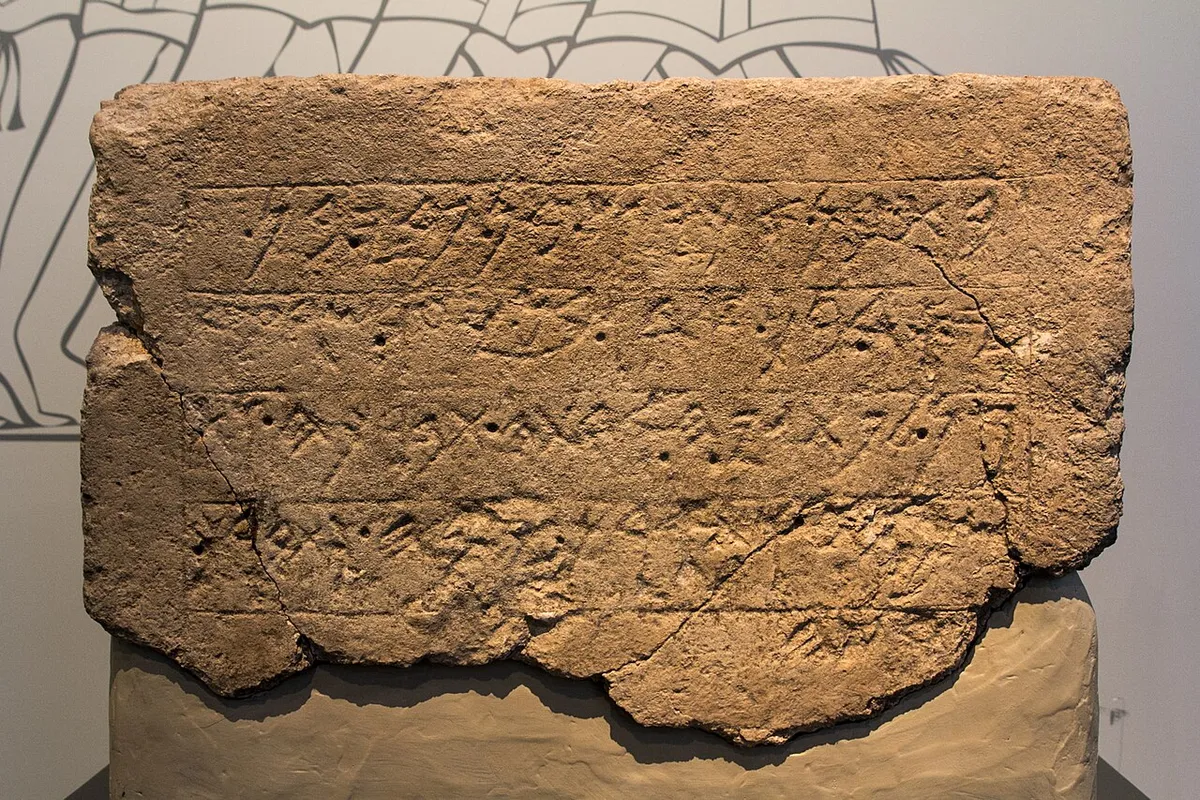
A limestone block found where it was set, dedicating a temple built by Ikausu son of Padi, ruler of Ekron, to his goddess. It names the city — confirming the identification of the mound as Ekron — and five of its kings. Padi and Ikausu are both known from Assyrian records too.
The temple which he built, Ikausu son of Padi, son of Ysd, son of Ada, son of Ya'ar, ruler of Ekron, for Ptgyh his lady.
- Kilipatikana
- In the ruins of a temple at Tel Miqne (Ekron), Israel, 1996 — Seymour Gitin and Trude Dothan's excavation
- Kinahifadhiwa
- Israel Museum, Jerusalem
- Lugha
- Phoenician script, Philistine dialect
- Jinsi kilivyotufikia
- Kimefukuliwa, au bado kimesimama pale kilipojengwa.
Kinachoonyesha
The ruler's name Ikausu is the same name as the Achish of 1 Samuel, but this king lived some three centuries later — the name persisted, the man is not the same.
Jinsi wanahistoria wanavyokitumia
One of the most important Iron Age finds in Israel; it settled the identification of the site and gave Philistine history a dynasty.
Katika Maandiko
Kinahusiana na
Vyanzo
- Gitin, Dothan & Naveh, "A Royal Dedicatory Inscription from Ekron", IEJ 47 (1997)
- Ekron Royal Dedicatory Inscription — overview
Kwa sasa maelezo haya yapo kwa Kiingereza. Tafsiri zitafuata.