Der Kurkh-Monolith — Ahab bei Qarqar, 853 v. Chr.
Ahab, König von Israel, war 853 v. Chr. eine reale Regionalmacht — auf das Jahr genau datiert durch den assyrischen Eponymenkanon.
Außerbiblisch genanntInschriftc. 852 BC
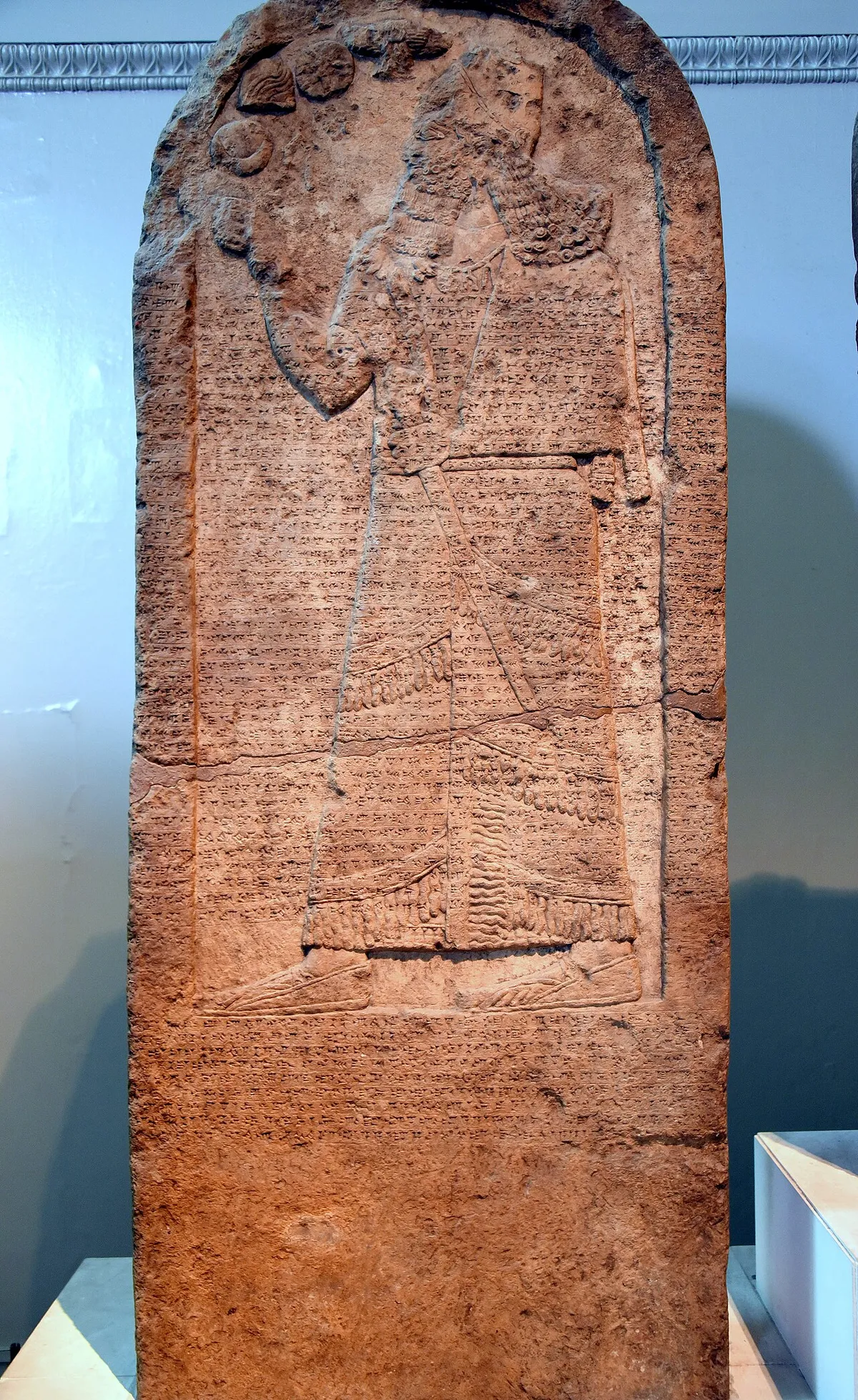
Shalmaneser III's account of the battle of Qarqar, where a coalition of twelve western kings met the Assyrian army. Among them is "Ahab the Israelite", credited with 2,000 chariots — the largest chariot force in the alliance. The Bible never mentions this battle; Assyria never mentions Ahab's dealings with Elijah. Each source knows the same king from its own side.
2,000 chariots, 10,000 soldiers of Ahab the Israelite.
- Gefunden
- Kurkh (Üçtepe), south-eastern Turkey, 1861 — John George Taylor
- Heute in
- British Museum, London (BM 118884)
- Sprache
- Akkadian
- Wie es zu uns kam
- Ausgegraben oder noch dort stehend, wo es errichtet wurde.
Was er zeigt
The identification of "Ahab the Israelite" is standard. The chariot figure is an Assyrian royal claim and, like all such numbers, may be inflated.
Wie Historiker es nutzen
The battle of Qarqar is a fixed anchor of Levantine chronology in secular scholarship; Ahab's date derives from it.
In der Schrift
Verbunden mit
Quellen
Diese Texte liegen vorerst auf Englisch vor. Übersetzungen folgen.