O monólito de Kurkh — Acabe em Carcar, 853 a. C.
Acabe, rei de Israel, era uma potência regional real em 853 a. C., data fixada ao ano pelo cânone epónimo assírio.
Citado fora da BíbliaInscriçãoc. 852 BC
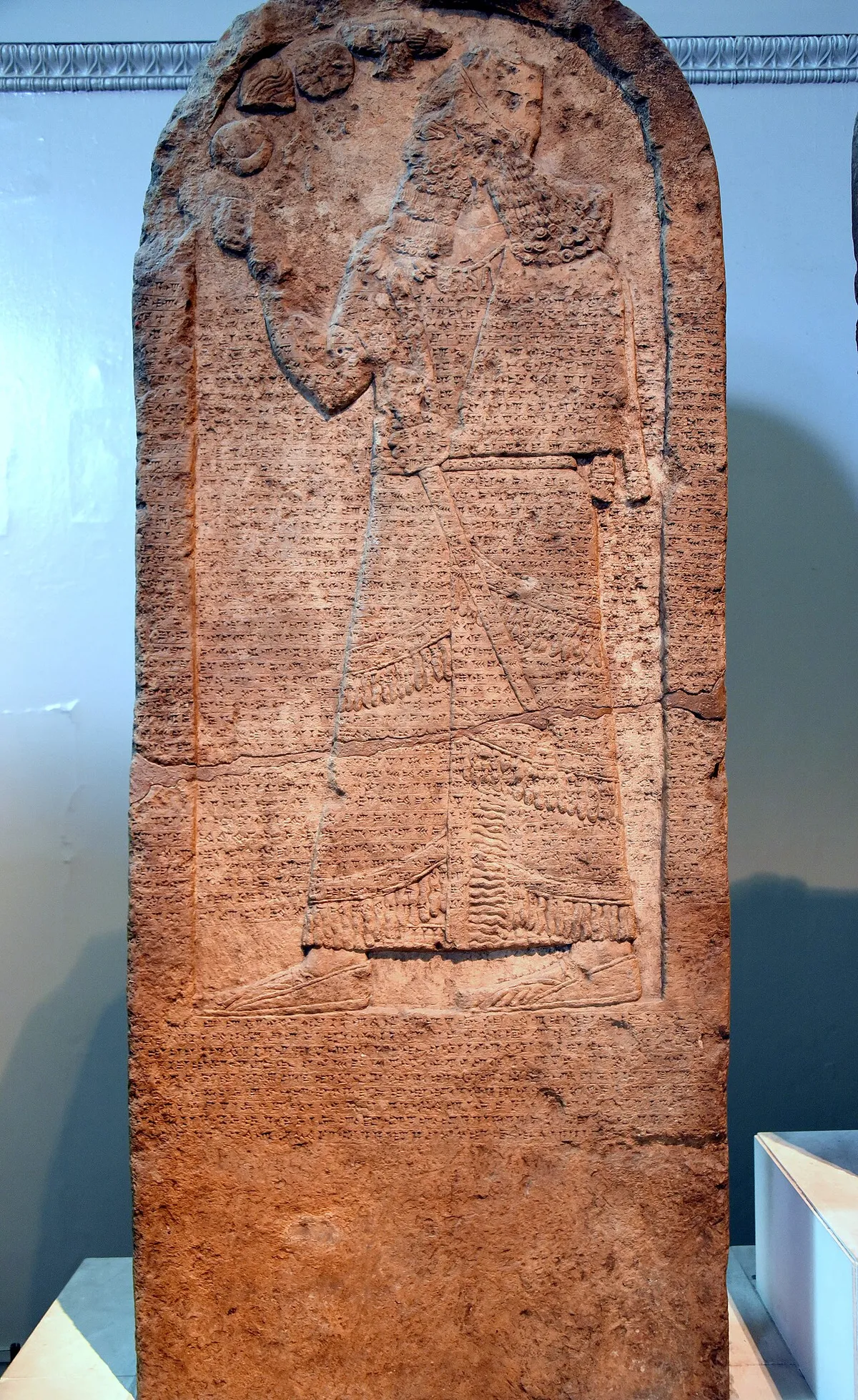
Shalmaneser III's account of the battle of Qarqar, where a coalition of twelve western kings met the Assyrian army. Among them is "Ahab the Israelite", credited with 2,000 chariots — the largest chariot force in the alliance. The Bible never mentions this battle; Assyria never mentions Ahab's dealings with Elijah. Each source knows the same king from its own side.
2,000 chariots, 10,000 soldiers of Ahab the Israelite.
- Encontrado
- Kurkh (Üçtepe), south-eastern Turkey, 1861 — John George Taylor
- Conservado em
- British Museum, London (BM 118884)
- Língua
- Akkadian
- Como chegou até nós
- Escavado, ou ainda de pé onde foi construído.
O que mostra
The identification of "Ahab the Israelite" is standard. The chariot figure is an Assyrian royal claim and, like all such numbers, may be inflated.
Como os historiadores o usam
The battle of Qarqar is a fixed anchor of Levantine chronology in secular scholarship; Ahab's date derives from it.
Na Escritura
Ligado a
Fontes
Por enquanto estes textos estão em inglês. As traduções virão.