Gat: eine Philisterhauptstadt und ihre Belagerung
Gat war eine sehr große Philisterstadt und wurde im 9. Jahrhundert belagert und zerstört — die Zeit und das Ereignis, von denen 2. Könige berichtet.
Vom Boden bestätigtAusgrabungsstätte9th century BC
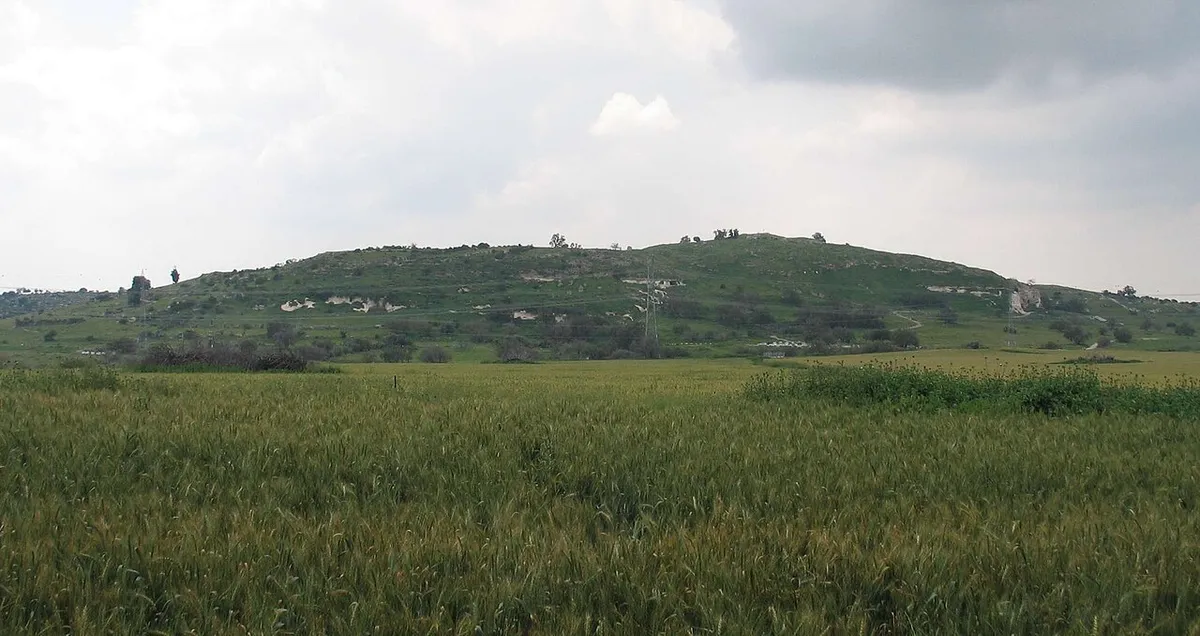
One of the largest cities in the region in its day, with a siege system dug around it — a trench and embankment more than two kilometres long — and a destruction layer above. 2 Kings records Hazael of Syria fighting against Gath and taking it, then turning toward Jerusalem.
Then Hazael king of Syria went up, and fought against Gath, and took it.
- Gefunden
- Tell es-Safi (Gath), Israel, 1996 — Aren Maeir's excavation
- Heute in
- In place; finds with the Israel Antiquities Authority
- Wie es zu uns kam
- Ausgegraben oder noch dort stehend, wo es errichtet wurde.
Was er zeigt
The siege works and destruction are well dated; attributing them to Hazael specifically is the excavators' reading and is widely but not universally accepted. An ostracon from the site carries two names etymologically similar to Goliath, which shows the name type existed there — no more than that.
Wie Historiker es nutzen
A major Philistine excavation; the siege system is among the earliest known in the region.
In der Schrift
Verbunden mit
Quellen
- Maeir (ed.), Tell es-Safi/Gath I: The 1996–2005 Seasons (2012)
Diese Texte liegen vorerst auf Englisch vor. Übersetzungen folgen.